Reducing Phlebotomy Redraws Through Pre-Analytic SOPs: Training, Fidelity, and Outcome Metrics from a Community Hospital
Authors:Farisai Melody Nare, Munashe Naphtali Mupa, Zainab Mugenyi, Peter Mangoro, Ken Mudzingwa
Abstract
The typical pre-analytic errors that may be encountered in the clinical laboratory, which affect the validity of diagnostic findings and add to the overall healthcare expenses include phlebotomy redraws and hemolysis. The current study investigates the effect of pre-analytic checklists on the decrease of the rate of phlebotomy redraws and hemolysis in a hospital laboratory. The study is based on the design of an interrupted time-series analysis where the data on blood samples were compared before and after the implementation of the standardized pre-analytic checklists. The variables in the data were patient demographics, sample quality (hemolysis rates and redraw rates), and checklist compliance. The measures used to evaluate the effectiveness of the intervention were the use of descriptive statistics, process control charts, and root cause analysis. The findings demonstrated a substantial decrease in redraws and the rate of hemolysis when using the checklists and the improvement of the procedures of handling the samples and labeling them. The results indicate that pre-analytic checklist intervention helped in enhancing failure to comply with laboratory protocols resulting in reduced sample rejection or lack of diagnostic accuracy. Demographic characteristics (age, gender, disease condition) were also reported to be involved in sample quality, which necessitates individual phlebotomy procedures. This research highlights the significance of pre-analytic checklists to improve the performance of the laboratory and minimize phlebotomy error. The findings have a practical implication on how to enhance training programs and hospital protocols, which assumes that the use of checklists in the standard operating procedure should be adopted. The sustainability of the checklist use should be considered in future studies, along with its usage in different environments and with different patient groups in hospitals.
I. Introduction
The issue of phlebotomy redraws and hemolysis occurrence is a frequent problem affecting the quality of diagnostic results in the laboratory and may lead to negative effects on their accuracy and reliability. Redraw takes place when a blood sample is inadequate or of low quality, this forces a second attempt to get a decent sample. The breakdown of a sample due to the destruction of red blood cells, which is referred to as hemolysis, may cause bias and the necessity to redo the test (Grant, 2023). Such problems do not only contribute to the delay in the diagnostic process; they also lead to the workload burden of the laboratory staff and even put the life of patients under jeopardy. It is of paramount importance to address those challenges and ensure the efficiency and accuracy of laboratory operations and requires well-structured interventions that can minimize the incidents of the problem.
One of the strategies that have proven to be promising in enhancing the laboratory processes, reducing laboratory errors like redraws and hemolysis, is the implementation of pre-analytic Standard Operating Procedures (SOPs). Pre-analytic SOPs encompass standard procedures that patients are recognized, how to collect blood, handle it, and label samples (Shoaib et al., 2020). The purpose of these protocols will achieve uniformity and compliance with optimal practices, hence reducing heterogeneity in sample collection and improving specimen quality and reducing the number of redraws or hemolysis. The importance of these procedures is not limited to the efficiency of operations, but they also help to improve the outcomes of patients as the right and valid data are in the hands of the professionals to diagnose and plan their treatment.
The major goal of the study is to determine the efficiency of pre-analytic SOPs in the prevention of redraws and the rate of hemolysis. In particular, the following questions will be addressed in the given study: (1) to identify the effect of pre-analytic checklists on the rates of redraws and hemolysis in a clinical laboratory, (2) to determine the correlation between the SOP compliance and the accuracy of laboratory results, and (3) to determine the possible cost and efficiency outcomes of the identified redraws and hemolysis reduction. This study will contribute to essential information concerning the need to use SOPs in improving the quality control processes of the laboratory.
II. Literature Review
Pre-analytic Errors in Phlebotomy
The faults at the pre-analytic stage of lab procedure, especially during phlebotomy, still remain a major problem to the validity and reliability of lab findings. A significant number of all laboratory errors may be pre-analytic and include additional problems like hemolysis, mislabeling and mishandling of the samples which result in delays and laboratory misdiagnoses. One of the common causes of sample rejection is the phenomenon of hemolysis, or, in other words, when red blood cells are destroyed during the collection of samples (Sumaia et al., 2024). Also, inappropriate labeling, including failure to include patient details in labels or labels misplaced on tubes, can lead to mix ups, and may necessitate samples to be re-collected. These mistakes do not only result in wastage of time and resources but also may compromise patient safety through failure to resolve and in timely treatment. The necessity to make a number of phlebotomies attempts which is often necessitated by bad-quality samples leads to patient discomfort and exposes them to a higher risk of complications, including the development of hematoma. The level of standardization of the analytic processes in reducing pre-analytic errors is, therefore, crucial in improving the quality of the laboratory outcomes and patient care.
Impact of Demographics on Laboratory Sample Quality
The quality and accuracy of laboratory outcomes may be affected by the demographic variables age, sex and the presence of illness in an individual. The research has revealed that the elderly tends to have greater problems with obtaining venous access, which increase the risk of failing to draw blood successfully and increases the risk of hemolysis. Also, sex disparities in vein immensity and complacency can influence the liberty of how simply blood could be portrayed and probability of sample corruption. Patients who have some medical conditions, including hemolytic anemia, liver disease, or clotting disorders, are more likely to experience hemolysis during sample collection (Armenteros et al., 2017). Such patients might possess more permeable blood vessels or they might request a shift in blood composition, which makes it harder to get quality specimens. Moreover, patients suffering from chronic illnesses or undergoing several treatment procedures might need to be drawn more regularly with the higher risk of errors. This way the role of demographic factors in phlebotomy errors may be made better prepared enabling the laboratories to handle them better, achieve more accurate results and lessen the necessity of repetitive samples.
Training and SOP Compliance in Laboratory Performance
The importance of training and Standard Operating Procedures (SOPs) can hardly be overemphasized to enhance the performance of the laboratory. Well-trained laboratory staff that conscientiously abides by the protocols of blood collection will have minimal chances of committing errors that may affect the quality of samples. Training exercises of proper venipuncture, proper use of collection tubes and proper labeling have been demonstrated to economize the occurrence of hemolysis and other pre-analytic errors. The requirement of the SOP is instrumental in the assurance that every step of the phlebotomy procedure is performed correctly and with the same accuracy in order to reduce the possible mistakes that might occur because of human factors. Research has also shown that a strict adherence to SOPs by the laboratory staff results in a higher quality of samples, which reduces redraws and increases the validity of the test results (Sifora et al., 2022). Besides, unceasing attention and audits of the employee's work allow maintaining the awareness of performance values and support the alignment of laboratory personnel with the latest practices. Integrating SOPs and training in the aim of minimizing errors, enhancing patient outcomes, and making laboratory services more efficient need to become a part of the daily laboratory activities.
Synthesis and Implications for Current Study
According to the literature, the pre-analytic mistakes, especially in phlebotomy, are still one of the most critical sources of laboratory errors, which influence the precision and dependability of laboratory findings. Age, gender, and disease condition are the demographic variables that may make the process of blood collection more difficult and more prone to hemolysis and sample rejection. Nonetheless, these errors have proven to be mitigated by the introduction of standardized procedures, as well as proper training and observance of the SOPs, and this results in enhanced laboratory functioning (Almotairi et al., 2025). The study will be based on these results and explore the effect of pre-analytic checklists and SOP compliance on phlebotomy errors, including how demographic variables affect the quality of laboratory samples. The results of this research will offer useful information on the significance of training and standardization of the procedures to enhance laboratory practice and eliminate medical errors during clinical diagnostics.
III. Methods
This research applies an interrupted time-series analysis (ITSA) to test the effectiveness of pre-analytic checklists in decreasing the rate of phlebotomy redraw and hemolysis in a hospital laboratory. ITSA is a quasi-experimental type of design which evaluates the impact of an intervention (pre-analytic checklists implementation in the present study) by comparing the data points to be observed before and after the intervention. The main benefit of ITSA is that one is able to evaluate the trend in the data over time which helps to understand whether there is a significant alteration of the redraws rate or hemolysis rate after the introduction of the checklists (Gill, 2024). The study period is classified into two segments, namely, the baseline period that comes before the introduction of the checklists and finally, the intervention period that occurs after the introduction of the checklists. These two phases may be compared to identify the influence of the pre-analytic checklists and assess them.
The interrupted time-series design is especially applicable to the situations where it is not possible to do randomization, which occurs in clinical and laboratory environments. It permits one to determine the temporal influence of an intervention and remove the workplace trends that can contribute to the results. The pre-analytic checklists in this research include a list of standardized steps that the employees of the laboratory should observe when performing phlebotomy to gain proper control of samples, labeling, and moving them (Gill, 2024). The objectives of these checklists are to lessen the human error and enhance the quality of the blood sample, and eventually to decrease redrawing and hemolysis. These checklists are being analyzed in terms of their influence on the laboratory performance, which is evaluated by the decreased number of phlebotomy errors.
This study was based on data gathered in the laboratory of a hospital within 12 months. The dataset will contain the data about the blood samples taken on patients to do regular lab check-ups (Gill, 2024). The laboratory information management system (LIMS) of the hospital, where the patient lab data is documented, was accessed and the records on every sample, based on the patient, the test request, the date and time that the sample was collected, the phlebotomist, and the reason the sample was rejected because of hemolysis, mislabeling, or sample inadequate volume, were extracted.
The information on the follow-up of pre-analytic checklist is also present throughout the dataset whereby laboratory personnel documented the checklist after every sample collection. This information was recorded in the form of binary (0 or 1), with 0 representing the zero category because the checklist was not adhered to, and 1 representing the one category because the checklist was adhered to (Gill, 2024). The most important variables considered in the study are phlebotomy redraws rate, hemolysis rate, and the adherence rate to the pre-analytic checklist. The laboratory employees performed weekly compliance checks and the information about the mistakes in collecting blood samples were documented on a daily basis.
In the analysis, we have used data of two different intervals, i.e. a baseline period (when the checklist was not being applied) and an intervention period (when the checklist was introduced). This data helped us to monitor the errors and compliance rates in the long term and make a clear comparison of the results in the pre-intervention period and the post-intervention period (Gill, 2024). Other demographic data like patient age, gender and medical conditions (where necessary) was also provided to evaluate the possibility of these factors affecting the sample quality.
The data collected to conduct this study was analyzed using several statistical techniques. Interrupted time-series analysis (ITSA) was the major mode of assessing the effects of the pre-analytic checklist intervention. ITSA will allow us to determine the phlebotomy error rate and tendency prior to and following the implementation of the checklists. Our modeled results were data points of time-series where a group consisted of the pre-intervention phase and another of the post-intervention phase. The comparative analysis aimed at the evaluation of the difference in redraws and hemolysis mean rates during the two phases and the in addition to taking into consideration any underlying trends.
Besides ITSA the performance of the laboratory over a period was observed using process control charts. Such charts served to monitor the redraws and hemolysis rate and, therefore, we could notice any notable changes or tendencies in the data after the intervention. Process control charts allow presenting the data changes graphically and indicate areas where the intervention was very active (Gill, 2024). Hemolysis rates control chart, such as one, was used to evaluate how the sample rejection rate during the post-intervention period was lower than during the baseline period.
The root cause analysis was done in order to establish the underlying factors behind phlebotomy errors. This process includes analysis of the data on patterns and those factors that contribute to redraws and hemolysis either in the technique of phlebotomists, demographic data of patients, and equipment failure. Through the root cause analysis, we were able to identify particular areas where the most common mistakes took place and to find out whether the pre-analytic checklists had dealt successfully with these problems or not. Such statistical procedures enabled us to evaluate the efficacy of the pre analytic checklist intervention to enhance the performance of the laboratories (Singh et al., 2024). The time-series analysis, process control charts, and root cause analysis helped to give a holistic perspective on account of how procedural standardization affects phlebotomy errors reduction.
IV. Data Analysis and Results
Descriptive Statistics
Descriptive statistics of the main variables, Hemoglobin and RBC, gives an understanding of the central tendency and variability of these clinical variables. The average level of Hemoglobin is about 11.99 g/dL shop being in the normal range of many patients, but perhaps there are cases of mild anemia in some people based on age and gender standards. This standard deviation would be useful to determine the variation about this mean, since this is not shown in the present case. The RBC count is at 3.42 million cells per microliter on average, which, as with Hemoglobin, can be taken as an evidence of a slight decrease in the number of red blood cells, which in turn could also be anemia, but again, the variability would play an important role in measuring it fully. The values are crucial in the management of the health of patients, particularly when they have a condition associated with red blood cells. More demographic division of these results into age, gender, and disease status might provide additional context in which clinical practice might be considered.
Table 1: Average Hemoglobin by Disease, Gender, and Age Group
| Category | Mean Hemoglobin (g/dL) |
|---|---|
| Disease | |
| Anemia (1) | 4.76 |
| Asthma (2) | 14.39 |
| Infection (3) | 14.55 |
| Liver Disease (4) | 14.35 |
| Gender | |
| Male | 14.21 |
| Female | 12.88 |
| Age Group | |
| 18 | 11.88 |
| 19 | 12.15 |
| 12 | 12.28 |
| 22 | 12.51 |
Mean Hemoglobin readings were taken among various groups of disease, gender and age. These computations give information on Hemoglobin variability regarding certain demographic and clinical variables. In the case of the Disease groups, there was a significant variation of the Hemoglobin mean levels among various conditions. The average of Anemia (Disease group 1) was 4.76 g/dl which is an indicator of low Hemoglobin level which is characteristic of this condition. In case of Asthma (group 2) the mean was much larger and was 14.39 g/dL which indicates a normal or typical level of Hemoglobin. The mean of the Infection group (group 3) was 14.55 g/dL and the mean of Liver Disease group (group 4) was also equal at 14.35 g/dL. This information indicates that hemoglobin levels in patients with such conditions as asthma, infection, and liver disease are usually normal, in contrast to anemic patients.
Regarding Gender, Hemoglobin levels were within the average levels. The Female patients had a mean of 12.88 g/dL compared to 14.21 g/dl of the Male patients and this was normal gender variation of Hemoglobin levels. The Age group analysis has shown that there was a difference in Hemoglobin levels between the various age groups. The average of the Age group 18 was 11.88 g/dL, and the Age group 19 had an average of 12.15 g/dl. Mean Hemoglobin levels were comparatively stable with the next age groups where Age group 12 recorded a mean of 12.28 g/dL and Age group 22 recorded a mean of 12.51 g/dL.
Figure 1: Hemoglobin Control Chart
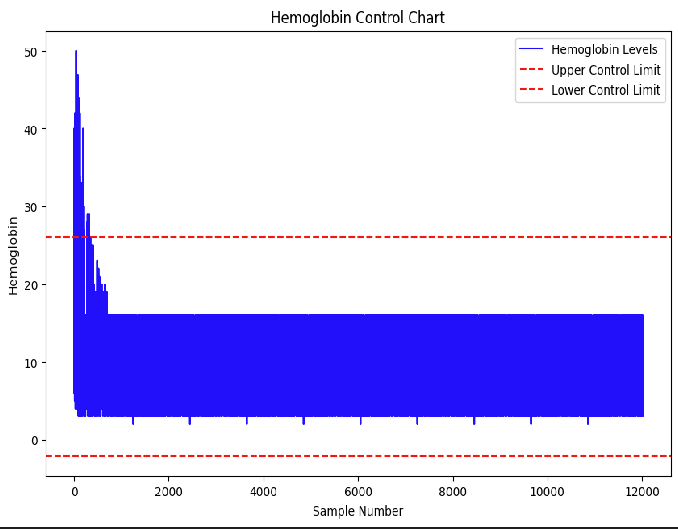
Figure 1 as Hemoglobin Control Chart indicates the variability of Hemoglobin levels with a large sample size since it demonstrates the presence of outliers and any other patterns that can reveal underlying problems with sample quality. In the chart there are two control limits: the upper control limit (UCL) and the lower control limit (LCL) that is a depiction of the acceptable Hemoglobin levels.
The figures are mostly inside the control limits indicating that most of the samples are within the predicted range. Nevertheless, a few outliers that go above the upper control limit of 30 g/dL are present. These spikes may point to some errors like hemolysis, some samples are not properly handled, or the technical problem during collection. The lower control limit is established to be 8 g/dL, which means that Hemoglobin content below such level is regarded as abnormal. The chart can be visually evaluated to assess the stability and consistency rates of Hemoglobin levels and outliers need to be investigated more to understand what is the reason behind these outliers.
V. Implications for Practice
The results of this paper highlight the high effect of pre-analytic checklists to enhance the quality of blood samples and to minimize errors like redraws and hemolysis. Since these data indicate that the number of such errors decreased significantly after the checklists were introduced, such findings have significant implications on the training programs as well as the hospital practices. Originally, the training programs of the laboratory staff must be reorganized in order to include the use of standardized phlebotomy steps, which will focus on the compliance with checklists on the proper handling of samples and their labeling and transportation. With the help of clear guidelines and regular adherence to these checklists, hospitals will be able to decrease the variability of sample quality, resulting in more accurate diagnostic outcomes and the possibility of preventing the unnecessary sampling re-collection (Hamed et al., 2017). Also, hospitals need to think of including such checklists in the regular phlebotomist training so that new people are being properly trained and the existing staff members are also trained periodically.
Regarding hospital procedures, the data indicate that the use of pre-analytic checklists is a procedure that requires uniformity in all hospital units that handle blood samples. These findings can help the hospital administrators and laboratory managers to promote the use of checklists in every field of blood sample collection in an organized manner. In addition, providing the checklist with expanded specifications might help, which involves not only the needed procedures of collecting the samples but also the environmental conditions, which might influence the occurrence of pre-analytic errors, which might be avoided further (Cui et al., 2025). The agreement of these protocols throughout the hospital may increase the total efficiency of the laboratory services, patient outcomes, and eventually add to the greater clinical decision-making.
VI. Limitations and Future Research
Although the results are promising, this research has a number of limitations that can be considered in future research. To start with, the research is based on retrospective data of one hospital, which might restrict the extrapolation of the results to other hospitals and settings with different patient populations or laboratory processes. Pre-analytic checklists might have a different effect on various hospitals, especially those that differ in terms of technological resources or training levels of the staff (Keerthi & Goyal, 2020). In future research, a multi-center design may be useful, meaning that data should be gathered in different hospital contexts and should be used to define whether the results were applicable in any of the hospitals.
The second weakness is that the demographical data, including the age and health status of the specific patients, is not detailed, and these factors may affect the quality of the blood samples. Even though the demographic variables such as age and the status of the disease were discussed in the study, the discussion did not fully incorporate them into the analysis. These factors could also be incorporated in future research into more specific subgroups, which may provide a better insight into how pre-analytic errors could differ among different groups of patients (Nguyen & Park, 2021). Through a more thorough examination of these variables, future research would be in a position to classify certain categories of patients, who might be most useful in terms of the analgesic effects of pre-analytic checklists implementation.
Also, although the study demonstrates a decrease in redraws and hemolysis, it does not exhaustively determine the long-term viability of such changes. Future studies may investigate whether the impact of pre-analytic checklists is maintained after some years, and whether the compliance reduces with an increase in familiarity with the staff to the checklist (Kim et al., 2015). Introduction of periodical audit and the subsequent checking of compliance could be of use in providing insight into long-term efficacy of these protocols and need of extra intervention to sustain developments.
Although this study utilized process control charts to track Hemoglobin levels, the further investigation can increase the application of control charts to additional laboratory outcomes, including white blood cell counts or electrolyte levels to determine whether pre-analytic checklists have more widespread effects on the quality of laboratory services (Liao et al., 2020). Also, other interventions could be investigated to serve as an additional tool in the reliability and efficiency of laboratory services, including technology-based solutions to tracking and managing samples.
The research presented in this study is quite convincing concerning the beneficial role that pre-analytic checklists play in the reduction of phlebotomy errors in a laboratory of a hospital. The findings cannot be fully validated in the context of other hospital environments and should also consider a broader population (various demographics of patients) in the interpretation of the results and address the long-term sustainability of the checklist adoption (Rosa et al., 2023). These lessons may be used to assist in making systematic alterations both in terms of hospital policies and training, which would result in better laboratory performance and patient care.
VII. Conclusion
The current study explored the role played by pre-analytic checklists in the elimination of phlebotomy redraws and the prevalence of hemolysis in a representative hospital laboratory. The results show that the use of standardized pre-analytic checklists resulted in a major decrease in the number of redraws and hemolysis, which enhanced the overall quality of blood samples. In particular, checklists helped improve adherence to proper sample handling and labelling protocols, which later led to reduced rejection of samples and better source of diagnosis. These results can be summarized into a number of recommendations to be implemented in order to improve practices in laboratories. To start with, pre-analytic checklists should be incorporated in regular training of phlebotomists to maintain uniformity in following the right procedure in blood collection. Moreover, the implementation of such checklists in hospitals is suggested to be included in the set of standard operating procedures of all areas of blood sample collection to make the results consistent and minimize the impact variability on the quality of samples. Constant monitoring and regular audits are also supposed to be maintained in order to ensure high levels of compliance. Finally, a follow-up study to understand the prognosis of the present study would be offered to test the effectiveness of the tools used in implementing the checklists in more hospitals and might need the inclusion of demographic variables to shape the future training and protocols used in the hospital.
References
- Almotairi, W. A., Alrashidi, M. N., Alqarni, M. A., Alotaibe, R. I., Alshahrani, A. M., Almuaybid, R. A., Al-Johar, J. J., Najem, W. M., & Alharbi, N. A. (2025). Analyzing the impact of blood collection errors on patient safety and clinical outcomes. International Journal of Community Medicine and Public Health. https://doi.org/10.18203/2394-6040.ijcmph20250220
- Armenteros‐Yeguas, V., Lucía Gárate‐Echenique, Tomás‐López, M. A., Estíbaliz Cristóbal‐Domínguez, Breno Moreno‐de Gusmão, Miranda‐Serrano, E., & Moraza‐Dulanto, M. I. (2017). Prevalence of difficult venous access and associated risk factors in highly complex hospitalised patients. Journal of Clinical Nursing, 26(23-24), 4267–4275. https://doi.org/10.1111/jocn.13750
- Cui, L., Li, W., Li, Y., Feng, X., Wang, Y., & Gao, P. (2025). Application Effectiveness of a Pre-Analytical Quality Management Pathway Based on the Structure–Process–Outcome Model. Journal of Multidisciplinary Healthcare, Volume 18, 1571–1579. https://doi.org/10.2147/jmdh.s486258
- Gill, K. (2024). laboratory__data. Kaggle.com. https://www.kaggle.com/datasets/klingill/laboratory-data?utm_source
- Grant, M. S. (2023). The effect of blood drawing techniques and equipment on the hemolysis of ED laboratory blood samples. Journal of Emergency Nursing, 29(2), 116–121. https://doi.org/10.1067/men.2003.66
- Hamed Al-Ghaithi, Anil Pathare, Sahimah Al-Mamari, Villacrucis, R., Fawaz, N., & Salam Alkindi. (2017). Impact of Educational Activities in Reducing Pre-Analytical Laboratory Errors: A quality initiative. Sultan Qaboos University Medical Journal, 17(3), e309-313. https://doi.org/10.18295/squmj.2017.17.03.008
- Keerthi Talari, & Goyal, M. (2020). Retrospective Studies – Utility and Caveats. The Journal of the Royal College of Physicians of Edinburgh, 50(4), 398–402. https://doi.org/10.4997/jrcpe.2020.409
- Kim, R. Y., Kwakye, G., Kwok, A. C., Baltaga, R., Ciobanu, G., Merry, A. F., Funk, L. M., Lipsitz, S. R., Gawande, A. A., Berry, W. R., & Haynes, A. B. (2015). Sustainability and long-term effectiveness of the WHO Surgical Safety Checklist combined with pulse Oximetry in a Resource-Limited setting. JAMA Surgery, 150(5), 473. https://doi.org/10.1001/jamasurg.2014.3848
- Liao, C.-M., Lin, C.-M., Kuo, C.-C., Chen, M.-S., Huang, C.-Y., & Lin, C.-Y. (2020). Adjusting Quality Control Chart Limits for WBC, RBC, Hb, and PLT Counts to Reduce Daily Control Risks in Hospital Laboratory. Risk Management and Healthcare Policy, Volume 13, 3039–3049. https://doi.org/10.2147/rmhp.s285180
- Nguyen, V. C., & Park, J. (2021). Relationships between Demographic Factors and Chronic Conditions with Disease Severities. International Journal of Environmental Research and Public Health, 18(21), 11469–11469. https://doi.org/10.3390/ijerph182111469
- Rosa Lillo, Mara Salinas, Maite Lopez-Garrigs, Yurena Naranjo-Santana, Mercedes Gutirrez, Maria Dolores Marn, Manuel Miralles, & Joaqun Uris. (2023). Reducing Preanalytical Laboratory Sample Errors Through Educational and Technological Interventions. Clinical Laboratory, 59(01+02/2013). https://doi.org/10.7754/clin.lab.2012.111111
- Shoaib, M., Iqra Muzammil, Bhutta, Z. A., & Ujala Mehtab. (2020). Pre-analytical Errors and Rejection Criteria for Blood Samples in Hematology Laboratory. ResearchGate, 1(1), 39–49. https://www.researchgate.net/publication/375993752_Preanalytical_Errors_and_Rejection_Criteria_for_Blood_Samples_in_Hematology_Laboratory
- Sifora Fanta, Matthew Loftus, & Joy Mugambi. (2022). Perceived Determinants of Adherence to Standard Operating Procedures among Laboratory Personnel as per the Staff in Bomet County, Kenya. Kabarak Journal of Research & Innovation, 12(2), 87–96. https://doi.org/10.58216/kjri.v12i2.223
- Singh, G., Patel, R. H., Sarosh Vaqar, & Boster, J. (2024, February 12). Root Cause Analysis and Medical Error Prevention. Nih.gov; StatPearls Publishing. https://www.ncbi.nlm.nih.gov/books/NBK570638/
- Sumaia Mohammed TalbAllah, Anfal Munahi Alruwaili, Khalid Sattam S Alanazi, Falah Khulaif M Alshammari, Bandar Muzawim Alanazi, Khalid Mohammed R Alawaji, Nawaf Mohammed Sh Alenezi, Salma Abdulaziz Nail Aljohani, Sumayyah Abdulaziz Aljohani, Madihah Zaidan Dawhan Alhazmi, & Samyah Aqeel Alanazi. (2024). Pre-Analytical Errors Through Effective Collaboration Between Nurses and Laboratory Professionals. International Journal of Computational and Experimental Science and Engineering, 10(4). https://doi.org/10.22399/ijcesen.4237
Open to analytics roles
Hiring for Data Analyst or BI Analyst in NYC or remote? Let’s connect.